Deep Blue v Kasparov
In May 1997, a significant shift in the relationship between human and machine intelligence occurred on a chessboard in New York City. After defeating IBM's Deep Blue in 1996 with a score of 4-2, world chess champion Garry Kasparov faced the upgraded supercomputer in a rematch. On May 11, 1997, after six games, Deep Blue won with a score of 3½-2½. Kasparov's resignation after just 19 moves in the final game marked a pivotal moment: a machine had overcome a human champion in a domain long associated with intellectual depth.
© Fellowship
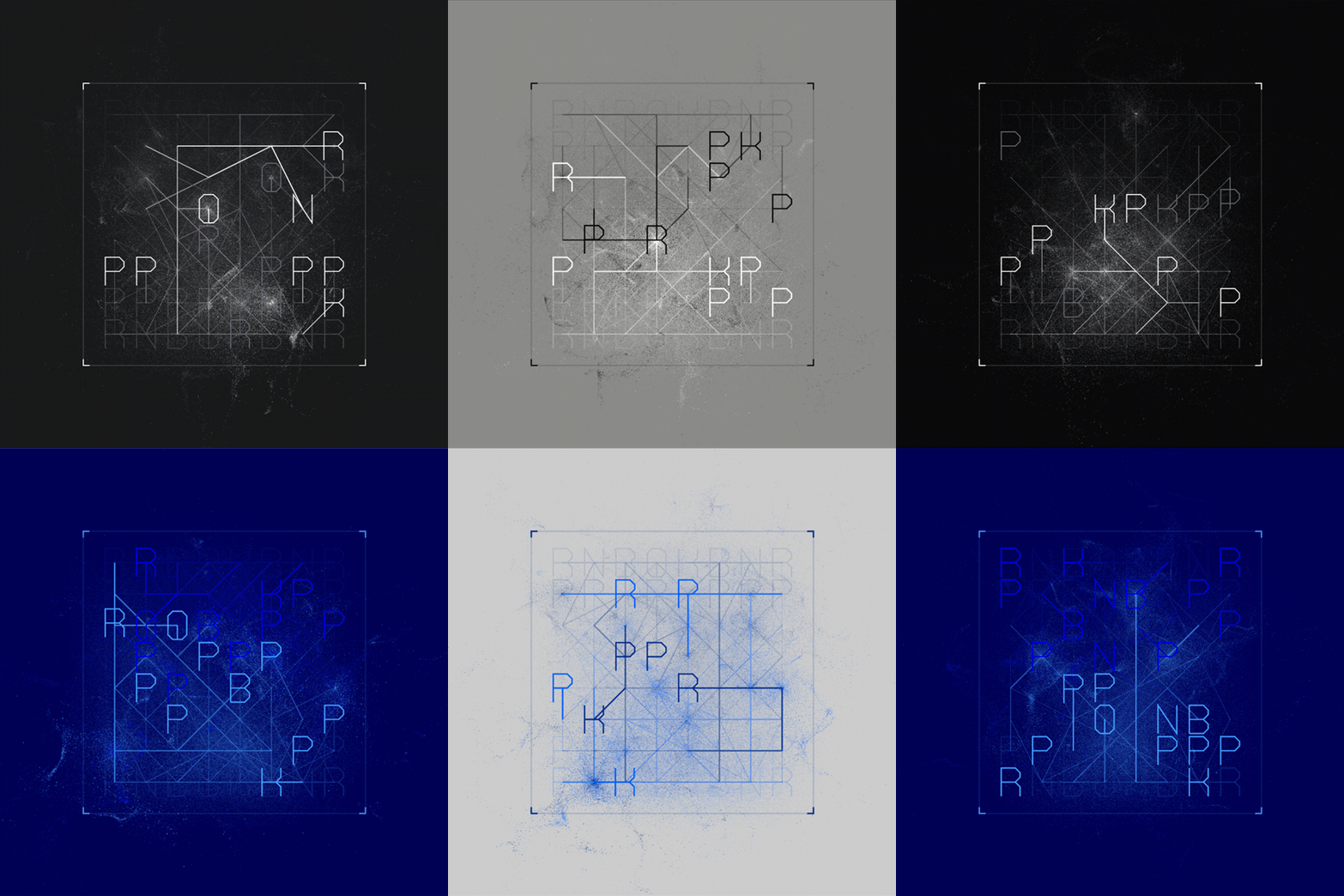
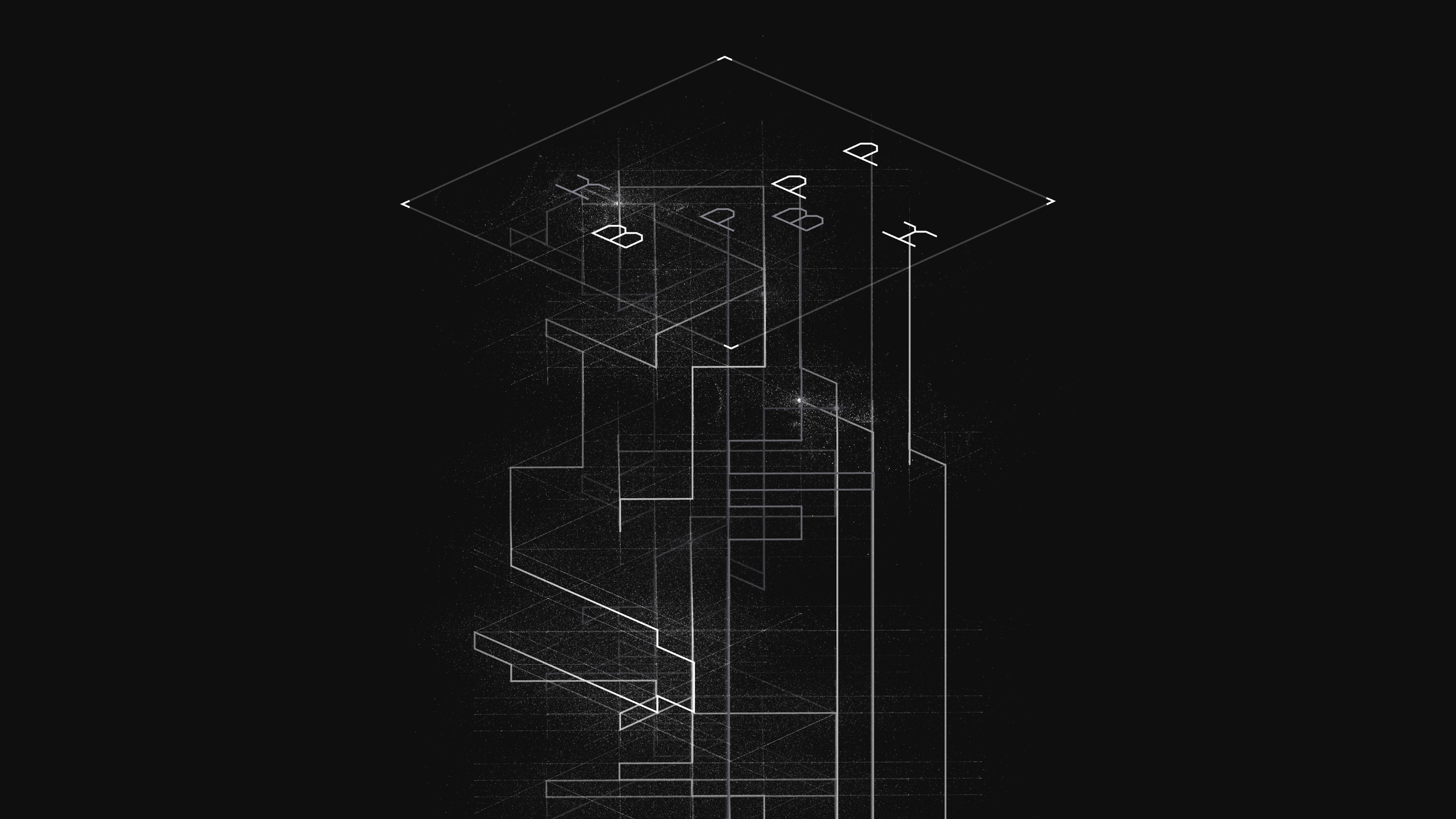
“Deep Blue v Kasparov” is a series of 12 data sculptures that examine this historical transition through spatial representation. Each piece (which represents one of the games they played in the period from 96-97) converts algebraic chess notation into three-dimensional form, where the xy-plane represents the board's 64 squares, while the z-axis shows the progression of moves through time.
In addition to the minimalistic web of lines representing the actual moves of the game, the other possible moves each piece could have made are drawn out by a less legible pattern of particles. Small “explosions” of these same particles are emitted from the positions where a piece was captured. Using JavaScript and WebGL, the sculptures create browser-based interactive spaces where viewers can explore the games' evolving structures and examine the intense fight between two minds of a different substrate.
© Bjørn Staal
The project uses computational tools to explore the boundary between human and computational thinking. The rules of chess create finite possibilities that nonetheless generate complex strategic landscapes. These visualizations render these abstract decision spaces into tangible forms that can be examined from multiple perspectives.Perhaps what emerges from studying these matches is that the question was never simply whether machines would surpass humans in calculation, but how we might critically reconsider our relationship with technology beyond zero-sum competition.
The digital series consists of 12, fully on chain, interactive data sculptures that is presented in an online exhibition at Fellowship in collaboration with ARTXCODE. The way these data-sculptures are constructed also makes it possible to produce physical counterparts to the digital versions.
© Bjørn Staal